
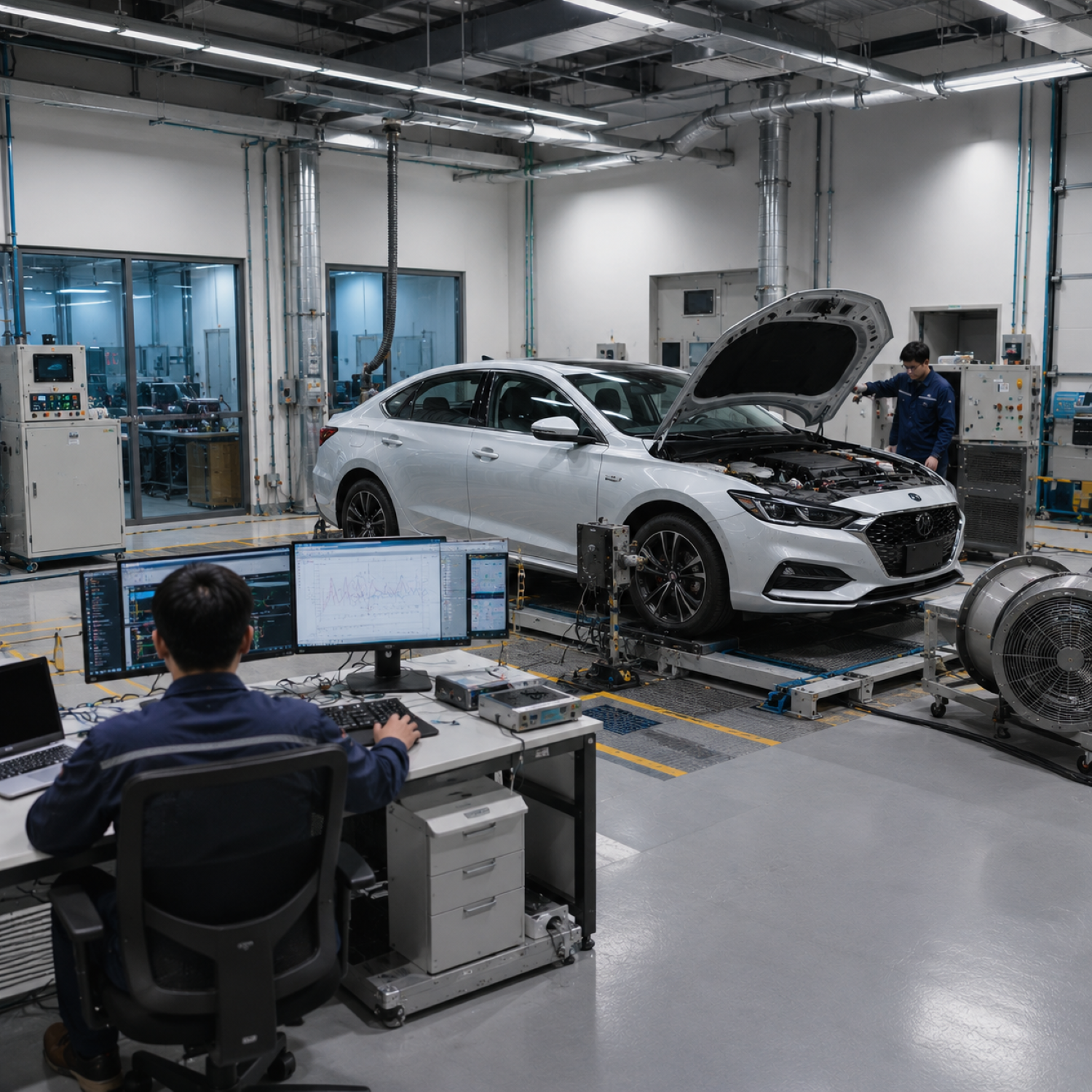
Optimizing Automotive Crashworthiness Testing Essential Best Practices for Industry Professionals
Understanding the Core Mechanisms of Crashworthiness Testing
Crashworthiness testing in the automotive sector involves a series of evaluations designed to measure a vehicle’s ability to protect occupants during collisions. These tests simulate real-world impact scenarios and analyze how the structural components absorb and dissipate energy. Key factors include the deformation patterns of the frame, the effectiveness of restraint systems, and the integrity of passenger compartments.
Mechanically, the tests rely on controlled impact forces where sensors record deceleration rates, intrusion distances, and dummy injury metrics. The data collected provide direct insights into the failure modes of materials and assemblies, enabling engineers to refine design aspects that contribute to occupant safety.
Best Practices for Accurate and Reliable Testing Results
To ensure rigor and consistency in crashworthiness evaluations, industry professionals follow established protocols. Executing these with precision maintains the validity of results and their applicability to vehicular safety improvements.
- Pre-test Calibration: Verifying sensor functionality, dummy positioning, and impact velocity calibration are critical for accurate data collection.
- Controlled Environmental Conditions: Maintaining consistent temperature and humidity minimizes variability caused by material property changes.
- Comprehensive Data Acquisition: Using high-speed cameras and multi-axis accelerometers ensures detailed capture of deformation dynamics and occupant kinematics.
- Post-test Analysis: Employing computational models alongside physical results enhances understanding of failure mechanisms and predicts potential improvements.
Integrating Advanced Testing Technologies
Emerging technologies such as robotic positioning systems and automated data processing have transformed testing workflows. These innovations reduce human error, increase repeatability, and shorten test turnaround times. For example, real-time monitoring with in-situ deformation sensors allows immediate adjustments and validation during impact tests.
Incorporating these tools supports a holistic approach to crashworthiness, where empirical results can be swiftly correlated with virtual simulations, expediting design iteration cycles and compliance verification.
Leveraging Relevant Resources in Automotive Testing
Industry professionals should remain informed on the latest regulatory requirements and technological advancements. Accessing technical documentation and case studies related to automotive testing allows for a deeper understanding of testing standards, methodologies, and emerging challenges in occupant safety engineering.
Summary of Key Practices in Crashworthiness Testing
| Practice | Purpose | Benefit |
|---|---|---|
| Pre-test Calibration | Ensure equipment accuracy and setup consistency | Reliable data enabling valid performance evaluation |
| Environmental Control | Standardize material behavior during tests | Minimized test-to-test variability |
| Advanced Sensor Integration | Capture detailed impact phenomena | Enhanced analysis of injury mechanisms |
| Post-test Data Correlation | Compare physical and computational results | Improved predictive accuracy for design refinement |